Everest Expedition
Max Altitude
8,848.86 m
Duration
57 Days
Difficulty
Extreme
Best Season
Spring

Start Point
Kathmandu

Group Size
2-15 People
Trip Overview
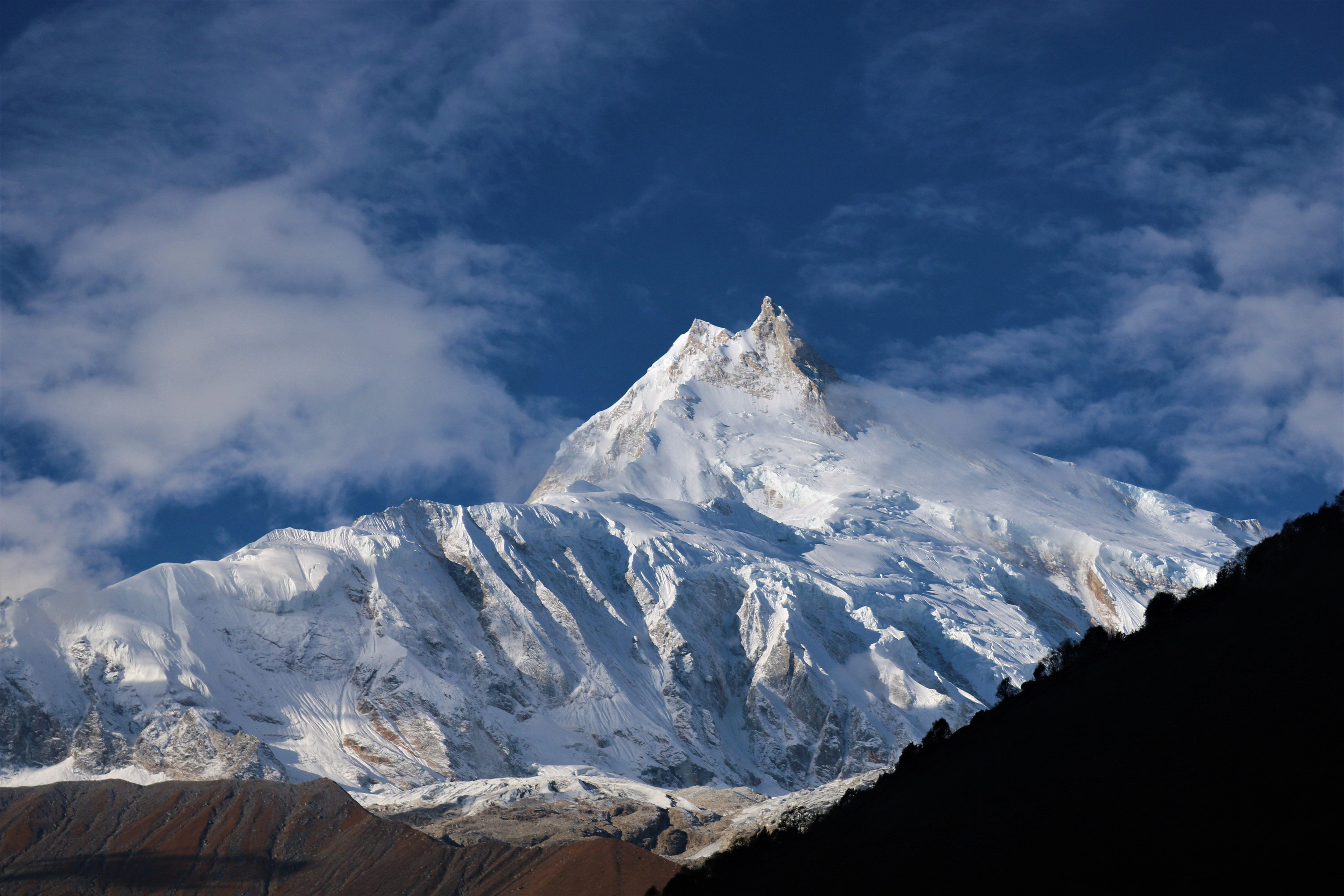
The Everest Expedition is the ultimate high-altitude mountaineering challenge, a professionally supported attempt to reach the 8,848.86-metre summit of Mount Everest, the highest point on Earth.
Following the classic South Col and Southeast Ridge route from Nepal, this 57-day expedition combines a gradual trekking approach through the Khumbu region with technical preparation, a Lobuche East acclimatization climb, Everest climbing rotations, high-camp movements and a carefully timed summit attempt. The programme includes a fully serviced Everest Base Camp, 1:1 personal climbing support from a Sherpa, supplementary oxygen, high-altitude tents, fixed-rope services, professional weather forecasting, and essential expedition logistics.
The journey begins in Kathmandu with an expedition briefing, equipment inspection, and final preparations. The team then travels overland to Manthali for the mountain flight to Lukla. From Lukla, the trekking approach follows the Dudh Koshi Valley through Phakding, Namche Bazaar, Khumjung, Pangboche, Dingboche and Lobuche before reaching Everest Base Camp at 5,364 metres.
Scheduled acclimatization days in Namche Bazaar and Dingboche help participants adapt gradually to the increasing altitude. After arriving at Everest Base Camp, the expedition team completes technical training and participates in a traditional puja ceremony before beginning the Lobuche East acclimatization programme.
The Lobuche East climb provides additional altitude exposure and allows participants to practise fixed-rope movement, crampon technique, jumar use, controlled descent and equipment management before entering the more demanding sections of Mount Everest. After completing the Lobuche East climbing programme or reaching the agreed turnaround point, the team returns to Everest Base Camp for rest and recovery.
The main Everest acclimatization rotations then progress through the Khumbu Icefall towards Camps I, II and III. These rotations allow participants to become familiar with the route, sleep at progressively higher elevations and prepare physically and technically for the summit programme.
Once the required rotations are complete, climbers return to Base Camp for an extended period of rest and recovery. The expedition leader monitors professional weather forecasts, route conditions, participant health, oxygen supplies and high-camp readiness before selecting a suitable summit window.
The final ascent progresses through the Khumbu Icefall, Western Cwm, Lhotse Face, Yellow Band and Geneva Spur before reaching Camp IV on the South Col. From the South Col, climbers follow the Southeast Ridge towards the Balcony, South Summit and the summit of Mount Everest.
Mount Everest is an extreme expedition that requires substantial prior high-altitude and technical mountaineering experience. Personal Sherpa assistance, fixed ropes, supplementary oxygen and professional expedition support strengthen the operational resources available to participants, but they cannot eliminate the serious risks associated with climbing above 8,000 metres.
All climbing activities, rotations and summit plans remain subject to weather, route conditions, participant health and operational readiness. The expedition leader has final authority over climbing schedules, turnaround times, summit decisions and participant safety.
Accommodation & Food standards

Standard
- Teahouse/lodge accommodation with basic but comfortable rooms.
- Hygienic breakfast, lunch and dinner.

Premium (Comfort)
- Upgraded lodges or boutique hotels (where available) with private rooms and better facilities.
- Enhanced meal options with greater variety and comfort.

Meal Types
- Breakfast
- Lunch
- Dinner
Day-By-Day
Your 57-Day Itinerary
A Hatti Hatti Treks representative will welcome you at Tribhuvan International Airport and transfer you to your hotel. After check-in, take the rest of the day to recover from your journey and make any initial expedition preparations.
Max Altitude
1,400 m
Accomodation
Four-star hotel in Kathmandu
Meals
Not included
Meet the expedition leader and support team for a detailed briefing covering the trekking approach, climbing programme, oxygen systems, high camps and emergency procedures. Your personal climbing equipment will also be inspected, allowing time to replace or arrange any missing items.
Max Altitude
1400m
Accomodation
Four-star hotel in Kathmandu
Meals
Breakfast
Travel from Kathmandu to Manthali in Ramechhap, normally a 5-6 hour drive depending on traffic and road conditions. After arrival, check into the hotel and prepare for the following morning's flight to Lukla.
Max Altitude
1400m
Accomodation
Hotel in Manthali
Meals
Breakfast, lunch and dinner
Take the scheduled mountain flight from Manthali to Lukla, normally around 20 minutes. After meeting the trekking crew and organising expedition baggage, begin the approximately 4-5 hour trek through villages and cultivated hillsides to Phakding.
Max Altitude
2,840 m
Accomodation
Teahouse in Phakding
Meals
Breakfast, lunch and dinner
Follow the Dudh Koshi Valley through forested terrain and enter Sagarmatha National Park. The approximately 7-8 hour trek crosses several suspension bridges before climbing steadily to Namche Bazaar, the main trading centre of the Khumbu.
Max Altitude
3,440 m
Accomodation
Teahouse in Namche Bazaar
Meals
Breakfast, lunch and dinner
Spend a second night in Namche to support gradual altitude adaptation. Complete an approximately 2-3 hour acclimatization hike to a viewpoint above town before returning to Namche for rest and recovery.
Max Altitude
3,440 m
Accomodation
Teahouse in Namche Bazaar
Meals
Breakfast, lunch and dinner
Make the short 2-3 hour trek from Namche to Khumjung, a traditional Sherpa village above the main valley. The shorter day provides additional acclimatisation while introducing the team to the cultural landscape of the Khumbu.
Max Altitude
3,790 m
Accomodation
Teahouse in Khumjung
Meals
Breakfast, lunch and dinner
Continue through the Tengboche region on a scenic 6-7 hour trek with views of Ama Dablam and the surrounding Himalayan peaks. Descend through the monastery area before climbing gradually towards Pangboche.
Max Altitude
3,980 m
Accomodation
Teahouse in Pangboche
Meals
Breakfast, lunch and dinner
Trek for approximately 3-4 hours into the increasingly open landscape of the Imja Valley. The route leads to Dingboche, surrounded by stone-walled fields and impressive views towards Ama Dablam and the Lhotse-Nuptse massif.
Max Altitude
4,250 m
Accomodation
Teahouse in Dingboche
Meals
Breakfast, lunch and dinner
Complete an approximately 3-4 hour acclimatization hike towards Nangkartshang Peak, ascending only as high as weather, available time and participant conditions allow. Return to Dingboche for rest, hydration and equipment preparation.
Max Altitude
4,250 m
Accomodation
Teahouse in Dingboche
Meals
Breakfast, lunch and dinner
Continue for approximately 6-7 hours through increasingly barren alpine terrain towards Thukla and the climbers' memorials above the settlement. From there, cross exposed high-altitude terrain before reaching Lobuche.
Max Altitude
4,910 m
Accomodation
Teahouse in Lobuche
Meals
Breakfast, lunch and dinner
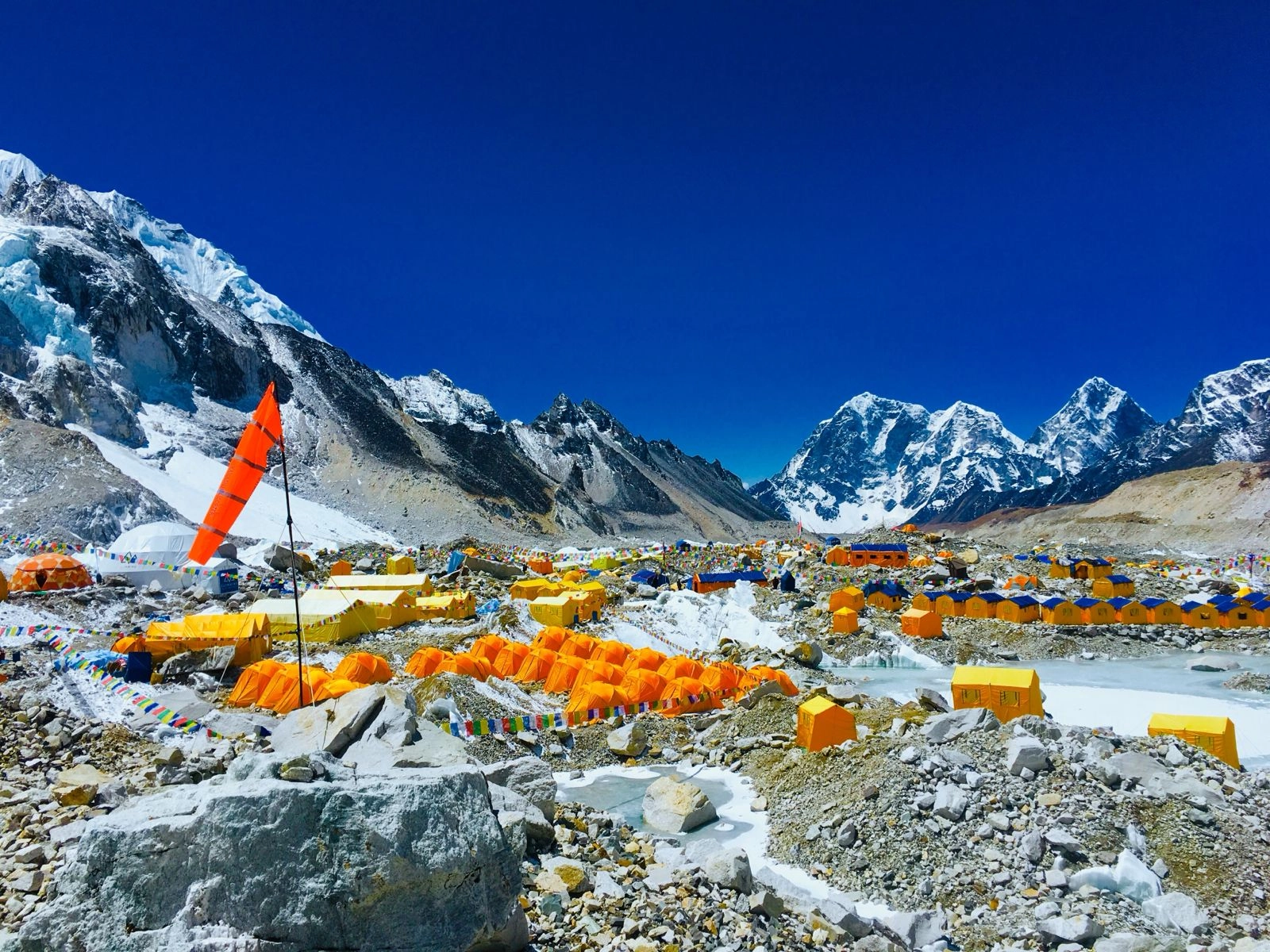
Follow the glacial terrain towards Gorak Shep before continuing across the moraine to Everest Base Camp, normally requiring approximately 6-7 hours of trekking. On arrival, settle into the expedition camp and receive an orientation covering Base Camp facilities, communication systems and safety procedures.
Max Altitude
5,364 m
Accomodation
Individual sleeping tent
Meals
Breakfast, lunch and dinner
These 38 days form the main operational period of the expedition and include Base Camp preparation, technical training, the Lobuche East acclimatization climb, Everest rotations, recovery periods, weather contingency and the summit attempt. The exact schedule remains flexible according to weather, route conditions and participant readiness.
Base Camp Preparation
The expedition leader and Sherpa team conduct practical training covering crampon and ice-axe use, fixed-rope movement, jumaring, controlled descent, ladder crossings, crevasse awareness, oxygen-system use and emergency procedures. A traditional puja ceremony is normally held before the main climbing programme begins.
Lobuche East Acclimatization Climb
The team descends towards the Lobuche area and continues to Lobuche East Base Camp, with High Camp used when required by the climbing plan. The climb provides additional altitude exposure and practical experience with fixed ropes, crampons, jumars and high-altitude equipment before the main Everest rotations. The summit attempt generally starts during the night or early morning. Progress depends on weather, route conditions, participant health and the expedition leader's turnaround time. After completing the climbing programme or reaching the agreed turnaround point, the team returns to Everest Base Camp for recovery.
Everest Acclimatization Rotations
The Everest rotations begin through the Khumbu Icefall, where fixed ropes and ladders protect exposed sections between crevasses and unstable ice formations. Climbers continue into the Western Cwm and towards Camps I and II, gaining important altitude exposure and familiarity with the route. Higher rotations may continue onto the Lhotse Face towards Camp III. These movements provide essential preparation for operating at extreme altitude before the summit programme.
Summit Programme
After completing the planned rotations, climbers return to Base Camp for rest and recovery. The expedition leader monitors professional weather forecasts, route conditions, participant health, oxygen supplies and high-camp readiness before selecting an appropriate summit window. The summit push progresses through the established high camps towards Camp IV on the South Col. From there, the route follows the Southeast Ridge towards the Balcony, South Summit and final summit ridge. Supplementary oxygen, fixed-rope services, high-altitude tents and Sherpa support are provided according to the expedition plan. The expedition leader retains final authority over rotations, turnaround times and summit decisions whenever safety or operational conditions require changes.
Max Altitude
8,848.86 m
Accomodation
Sleeping tent
Meals
Breakfast, lunch and dinner
Following the climbing period, the expedition team begins clearing Base Camp and preparing shared equipment for transportation. Non-essential facilities are packed while the sleeping, kitchen and safety facilities required for the final night remain operational, and expedition waste is managed according to applicable regulations.
Max Altitude
5,364 m
Accomodation
Sleeping tent
Meals
Breakfast, lunch and dinner
Leave Everest Base Camp and descend through the glacial terrain towards Lobuche before continuing to Pheriche. The significant loss in elevation brings denser air, although accumulated expedition fatigue means a steady and controlled pace remains important.
Max Altitude
5,364 m
Accomodation
Teahouse in Pheriche
Meals
Breakfast, lunch and dinner
Continue descending through Pangboche and the forested Tengboche region on an approximately 6-7 hour trek. Several short uphill sections remain before the trail eventually returns to Namche Bazaar.
Max Altitude
Approximately 4,240 m
Accomodation
Teahouse in Namche Bazaar
Meals
Breakfast, lunch and dinner
Descend to the Dudh Koshi and retrace the familiar trail through Phakding. The approximately 6-7 hour journey includes several short climbs before the final approach to Lukla.
Max Altitude
3,440 m
Accomodation
Teahouse in Lukla
Meals
Breakfast, lunch and dinner
Take the scheduled morning flight from Lukla to Manthali, subject to weather and operational conditions. After landing, continue by road to Kathmandu, normally requiring approximately 5-6 hours, and transfer to your hotel.
Max Altitude
2,840 m
Accomodation
Four-star hotel in Kathmandu
Meals
Breakfast
Enjoy a free day in Kathmandu to rest, organise expedition equipment, shop for souvenirs or explore independently. This day also provides limited flexibility following the weather-dependent return from Lukla.
Max Altitude
1,400 m
Accomodation
Four-star hotel in Kathmandu
Meals
Breakfast
Your Everest Expedition concludes today. A Hatti Hatti Treks representative will transfer you to Tribhuvan International Airport according to your international departure schedule.
Max Altitude
1,400 m
Accomodation
Not included
Meals
Breakfast, subject to departure time
We Accept




What's Covered
Inclusion And Exclusions
What's Included
- Mount Everest climbing permit
- Sagarmatha National Park entry permit
- Khumbu Pasang Lhamu Rural Municipality entry permit
- Airport pick-up and drop-off by private vehicle in Kathmandu
- All Applicable local-area and government permits and fees (does not include filming and drone permits)
- Four nights at a four-star hotel in Kathmandu on a bed-and-breakfast basis
- One night of hotel accommodation in Manthali with Breakfast, lunch and dinner during the stay
- Private transportation between Kathmandu and Manthali
- Scheduled domestic flights between Manthali and Lukla
- Teahouse accommodation during the trekking approach and return journey
- Breakfast, lunch and dinner during the trekking and climbing sections
- Fully serviced Everest Base Camp accommodation
- Individual sleeping tent at Everest Base Camp
- Base Camp kitchen, dining, communication and toilet tents
- Base Camp charging facilities, subject to power availability
- Base Camp internet service, subject to network availability
- Guided Lobuche East acclimatization climbing programme
- Lobuche East climbing permit
- Climbing Sherpa or mountain-guide support during the Lobuche East programme
- Lobuche East Base Camp and High Camp services, when operationally required
- Shared high-altitude tents for Lobuche East and the Everest high camps
- Shared high-camp stoves, fuel and essential group climbing equipment
- Porter or yak support for Lobuche East group equipment, when operationally required
- Technical training and safety instruction at Everest Base Camp
- Traditional expedition puja ceremony
- Fixed-rope charges, Khumbu Icefall route and ladder charges on Mount Everest
- Three to five supplementary oxygen bottles per participant, with the final allocation confirmed in the expedition contract
- One oxygen mask and regulator set per participant for expedition use
- Professional mountain weather-forecasting service
- Experienced Everest expedition leader
- Professional climbing Sherpa team with One personal climbing Sherpa for each participant
- Porter support for up to 60 kg of expedition baggage per participant during the trekking approach
- Expedition liaison, administrative and government documentation services
- Staff salaries, meals, accommodation and transportation
- Insurance and required expedition equipment for the expedition staff
- Group medical and first-aid kit
- Emergency communication equipment
- Base Camp and high-camp logistical support
- Expedition cargo handling and equipment transportation
- Waste-management services and applicable environmental fees
- Applicable government taxes and company service charges
What's Not Included
- International airfare
- Nepal entry visa fees
- Comprehensive travel and mountaineering insurance
- Emergency rescue and helicopter evacuation
- Hospitalisation and medical treatment
- Additional Kathmandu accommodation outside the itinerary
- Lunch and dinner in Kathmandu
- Personal trekking and climbing equipment
- Equipment rental unless specifically included
- Hot showers during the trek
- Wi-Fi and charging fees during the trek
- Alcoholic beverages
- Soft drinks and bottled water
- Personal snacks and expenses
- Oxygen beyond the confirmed package allocation
- Summit bonus for the personal climbing Sherpa
- Tips and gratuities for Base Camp staff and the climbing team
- Additional accommodation, meals, helicopter flights or transportation caused by delayed, diverted or cancelled domestic flights
- Costs resulting from weather, route changes or itinerary modifications
- Expenses caused by illness, early withdrawal or unforeseen events
- Any service not mentioned under Cost Includes
Common Questions
FAQs
The complete Everest Expedition lasts around 57 days. This includes arrival and preparation in Kathmandu, the trek to Everest Base Camp, technical training, the Lobuche East acclimatisation climb, Everest rotations, the summit period, the return trek and final departure. However, the duration may vary depending on many factors like weather, documentation and other unavoidable reasons.
The expedition follows the South Col and Southeast Ridge route from Nepal. The route passes through the Khumbu Icefall, Western Cwm, Lhotse Face, Yellow Band, Geneva Spur, South Col and Southeast Ridge.
Participants must have extensive technical mountaineering experience and successful experience on at least one major 7,000-metre mountain. Previous experience on an 8,000-metre expedition is strongly recommended.
Days 13-50 provide a 38-day operational climbing period. This period covers Base Camp training, the puja ceremony, the Lobuche East acclimatisation climb, Everest rotations, rest, recovery, weather contingency, high-camp preparation and the Everest summit attempt.
Yes. The standard expedition package includes one personal climbing Sherpa for each participant. The Sherpa provides support during climbing rotations, high-camp movements and the summit programme, subject to safety and operational conditions.
The package includes three to five supplementary oxygen bottles per participant, together with one oxygen mask and regulator set. The final oxygen allocation is confirmed in the expedition contract.
The package includes four nights at a four-star hotel in Kathmandu, one hotel night in Manthali, teahouse accommodation during the trekking approach and expedition tents at Everest Base Camp, Lobuche East camps and Everest high camps. Breakfast is included during the scheduled Kathmandu hotel stays, while breakfast, lunch and dinner are included during the Manthali, trekking and climbing sections. Kathmandu lunches and dinners are not included.
Yes. The package includes the Mount Everest climbing permit, Lobuche East climbing permit, applicable national park and local-area permits, fixed-rope charges, Khumbu Icefall route charges and scheduled flights between Manthali and Lukla.
Flights and climbing activities are subject to weather, visibility, route conditions, fixed-rope progress and operational decisions. The itinerary may be modified when necessary. Additional helicopter flights, accommodation, meals or transportation caused by disruption are normally not included.
No. An Everest summit cannot be guaranteed. Weather, route safety, acclimatisation, participant health, oxygen availability and high-camp readiness determine whether a summit attempt can proceed. The expedition leader has final authority over summit timing, turnaround decisions and participant safety.
Keep Exploring